
Chesterfield Update and Photo Essay
By Barb Chamberlain
Yes, Virginia, there is a smaller sized Chesterfield tumbler.
Imperial Glass Company was the producer of the Chesterfield pattern, probably in the later years of the classic carnival glass era. It is a simpler pattern that spans both carnival and stretch glass. It was originally called Colonial Crystal, No. 600 by the company. Crystal pieces in this pattern were made both before and after the carnival production. We carnival collectors decided on the name Chesterfield to distinguish it from the plethora of paneled patterns that were produced during this era. If you are like me, the pattern numbers are definitely harder to remember.
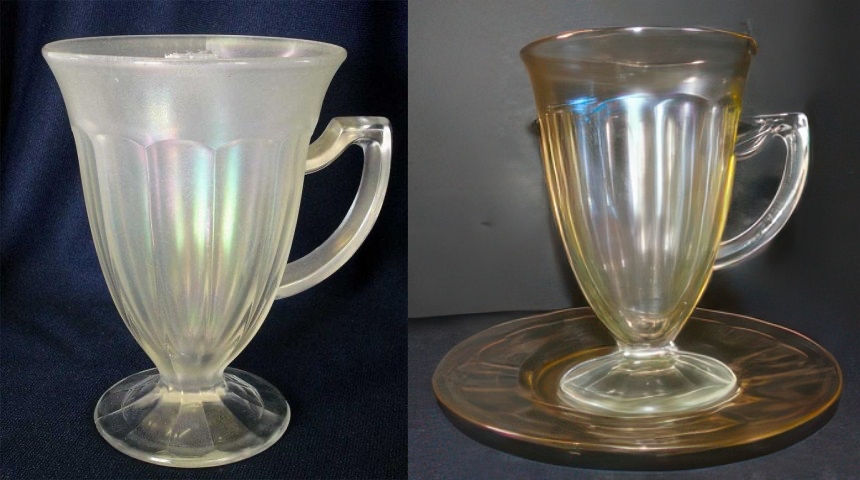
Both Seecks and Dave Doty mentioned that there was a smaller sized tumbler than the red, white, or teal larger sized tumblers that seem to match the tankard pitchers. This smaller sized tumbler is about four and three‐fourths inches tall and holds about eight ounces of liquid. The diameter of the base of the smaller one is about two and three‐sixteenths inches and top diameter is two and fifteen‐sixteenths. The larger sized tumbler is about five and one-eighth inches tall and holds ten ounces of liquid. The larger one’s base diameter is about two and one-fourth inches and has a mouth diameter of three and one-fourth. Both have sixteen-point stars impressed in the base.
The tall tumbler is found in aqua, red, teal, and white. Are these tall tumblers found in marigold, as well? The small tumbler has been reported only in marigold so far. The small tumbler bears an Imperial Cross mark.
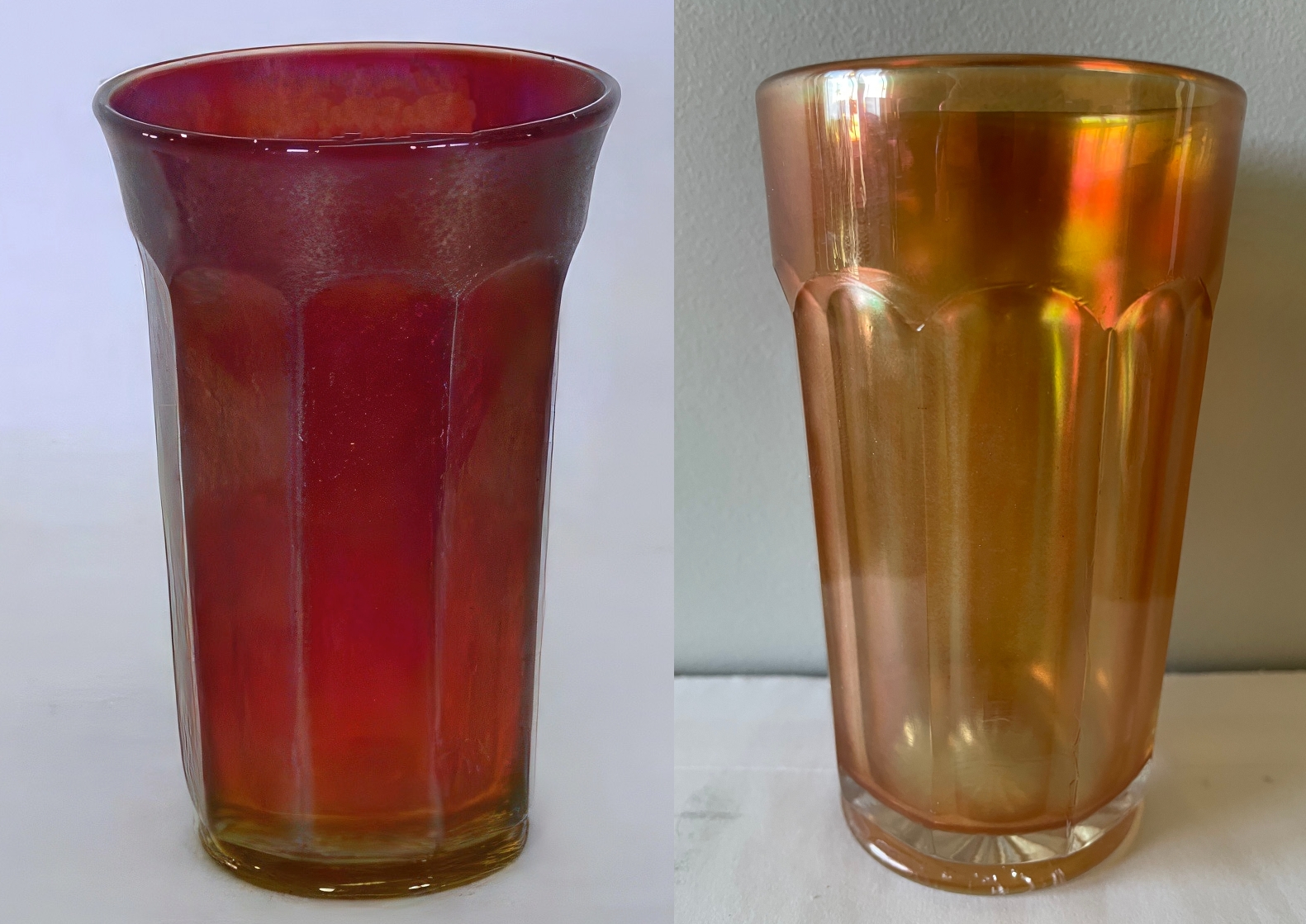
The red tumbler, on the left, is the taller tumbler in red. The tumbler on the left is the shorter one. This marigold one doesn’t flare as much as the red one and has the Iron Cross mark on the inside base. Red tumbler photo courtesy of Candy Brockmeyer.
The tankard pitchers were originally made with a matching lid, many of which were lost to breakage or carelessness. These pitchers are found in red, teal, and marigold. Could there be a white pitcher to accompany the tumblers?
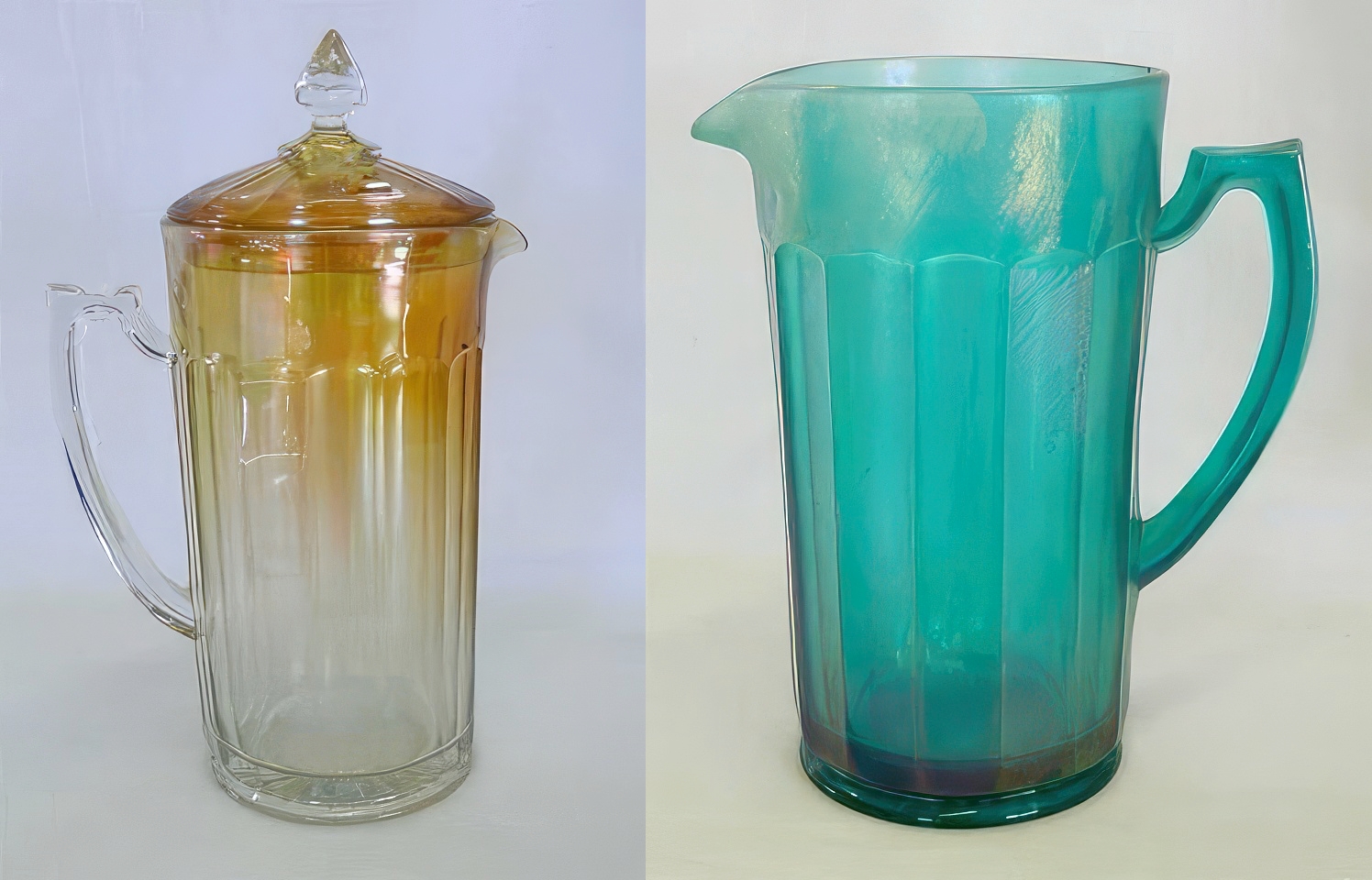
The water pitchers are tall, nearly straight vessels. The marigold one retains the original lid which is uncommon. If you look at the handles they have the flat top on the outer edge, a characteristic trait of this pattern. Red is another color I have seen. Carnival Glass 101 lists these as being found in celeste and white, as well. Happy hunting! Pitcher photos courtesy of Seeck Auctions.
The creamer and sugar which are often identified as Chesterfield are not really Chesterfield. They have a different identification number – No. 609 1/2. They don’t have the distinctive band effect that the other items in the No. 600 line display. Jim Seeck now refers to this set as Optic. These sets make a nice accompaniment to the Chesterfield pieces since they are found in red, teal, white, and marigold.
The Thistlewoods show the correct sugar bowl on their website, according to the original advertisement that Diane Fry shows on her website. It is marigold. This sugar bowl looks just like the tiny two-handled toothpick holder that I have seen, but the sugar obviously would be larger. I have never seen any of the table set pieces in carnival glass.
Another piece that I found interesting was most likely a whimsey stemmed plate that was made from one of the sizes of compote molds while the glass was still hot enough to reshape. It would make a nice addition to a red collection.
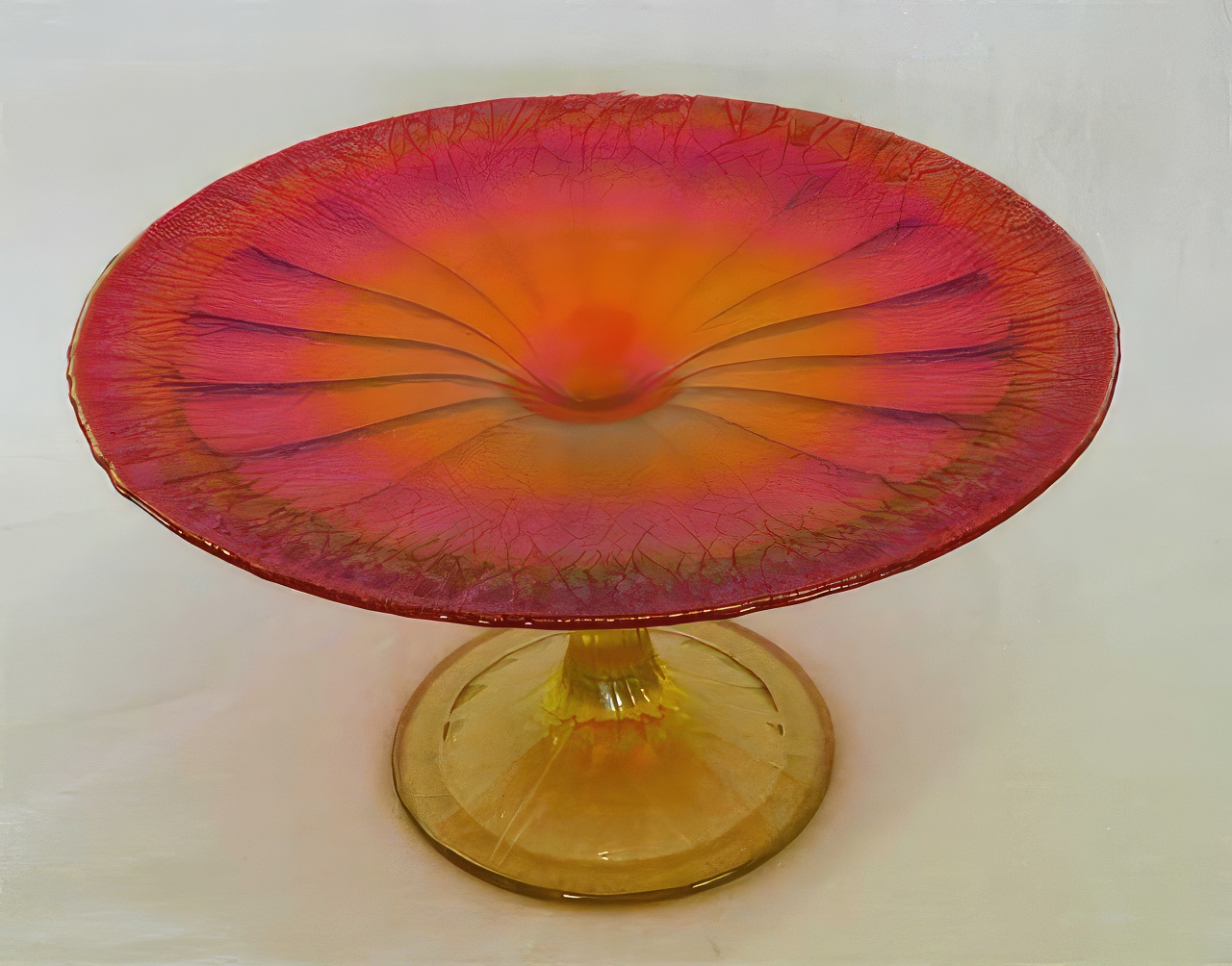
The stemmed cake plate in red might be the only one known. It was no doubt made from one of the compote molds and flattened when the glass was still in the semi-‐molten stage. Looking at the edge, it’s possible it could have been made from the same mold as the white compote in the middle below. Seeck Auction photo.
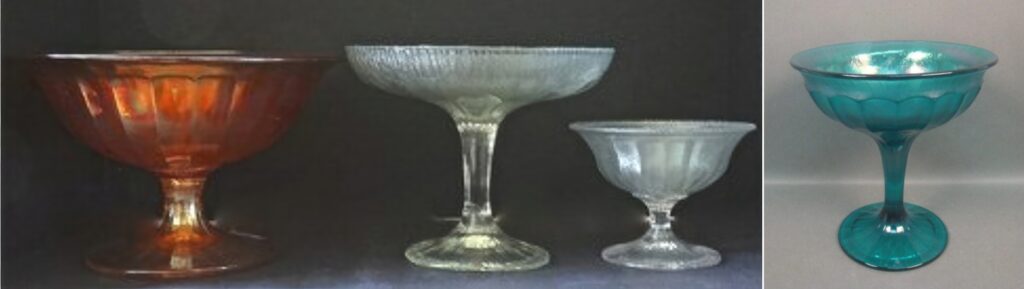
Compotes come in a multitude of sizes as you can see with all four compotes above. The marigold might not be quite as tall as the white one in the middle, but holds a great deal. These compotes may be found in most of the colors mentioned in this article.
There is a great range of pieces that is available in the Chesterfield pattern. The panels need to be on the exterior of the piece, so if you happen to have a plate that you feel is Chesterfield, make sure the pattern is on the bottom of the piece.

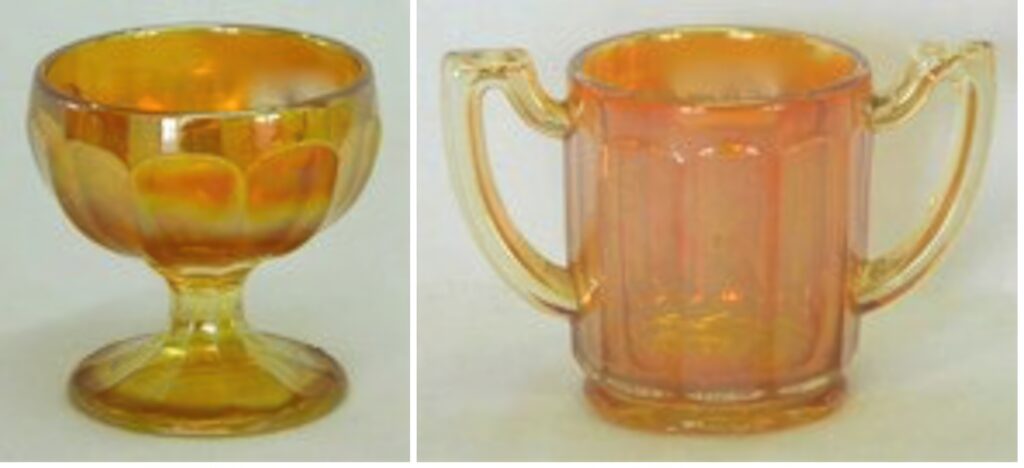
The tiny salt on the left is found in marigold and it sports the Imperial Cross mark. Seeck auctions sold an unmarked purple salt. On the right is the two-handled toothpick holder which usually is marked with the Iron Cross mark. It is only known in marigold. Seeck Auction photos.
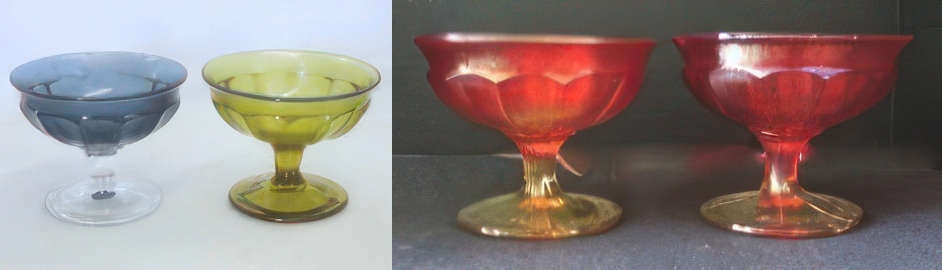
The sherbets above in smoke and amber sold at a Seeck stretch glass auction. I imagine that they are not easy to find in those colors. The amberina and red examples above are in our collection. Other colors may be known, but to my knowledge I have not seen them.
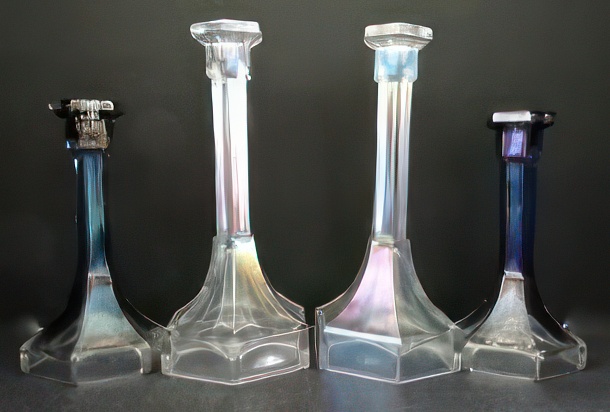
Candlestick holders can be found in smoke and white as shown here. As you can see, they come in two sizes – nine inches and seven inches. They can also be found in marigold, amberina, red, and teal. One lone purple Chesterfield holder sold on a Seeck online auction.
Included in this article is a photo essay of those pieces mentioned above plus many of the other shapes that you might look forward to finding. If you have an interesting shape or color, please email me at [email protected] or write to me at 124 E. Honey Creek Dr., Manchester, IA 52057. Include a photo if possible.
This article first appeared in the ICGA Pump in the June 2016 issue and is reprinted with permission.