
Linns’ Mums
By Kathi & Galen Johnson
A piece of pride in our collection is a beautiful, seldom seen bowl called Linn’s Mums. We purchased the piece from Diane Fry in about 2017 – we had let her and Dean know that if they were ever ready to sell it, we would be honored to buy it.
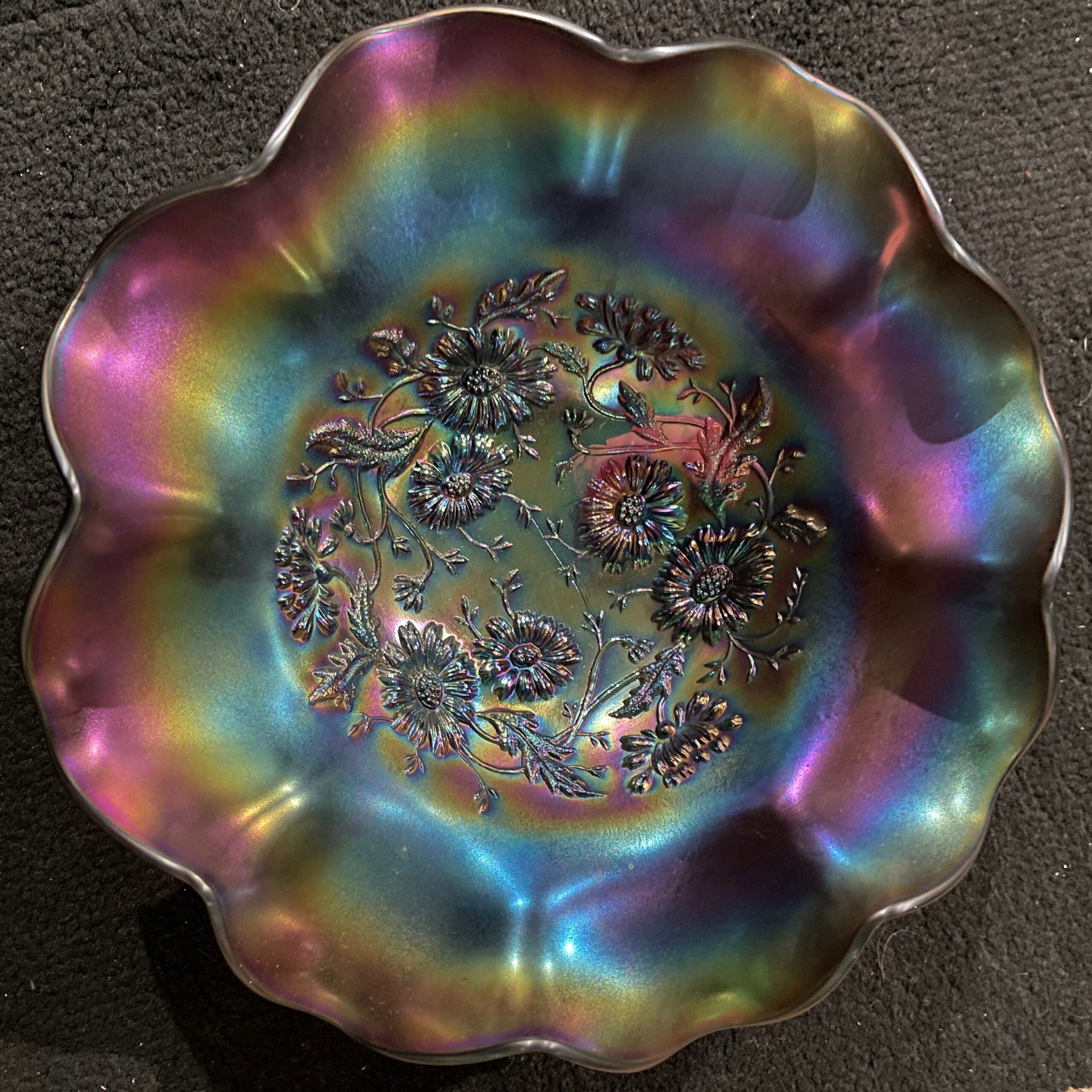
Here is what Diane wrote about the pattern on Carnival 101 (dated 9/03):
THE IMPOSING FACTS ABOUT “LINN’S MUMS“
Linn Lewis was an avid carnival glass collector living in the Pacific Northwest during the ’80’s-early ’90’s when we came to know him while living in California. Before being stricken with a crippling disease some years ago; one which eventually took his life; he would attend some of the Northern CA Conventions, scouted around for glass, as we all do, and following his “find” of this unusual piece, called us one evening to discuss its qualities-off-handedly naming it for himself since no others existed at that time….(you know the saying: “It’s yours-you can call it whatever you like.”) Sometime later, another example was reported.
Anyone attending the Tampa Bay Carnival Glass Convention auction on Feb. 11, 2000, heard Tom Burns relate the above story (in part) as the bowl came up for sale, saying he had not known the facts when calling the piece “Dancing Daisies” at the time he was readying the brochure for the printer.
Since Dean & I were the successful bidders for this very rare and beautiful bowl, we believe that in honor of Linn’s role in locating it, and his devotion to carnival glass, the name should remain.
LINN’S MUMS
Close examination of this 9″ bowl, reveals to any of us who avidly collect the Advertising pieces that the floral design in this eight ruffle bowl displays the same basis MUM….Obviously the crafter of both molds enjoyed the beauty of that flower. We consider the piece to be an appropriate companion for our collection of some 22 Advertising plates, whether they be Northwood or Fenton in origin. There are only subtle differences in the Mum patterns used by both manufacturers. They come into play when leaf and stem design are compared, some having two instead of one leaf in a given position. One stem may be shorter than another. Perhaps a stem is slightly more curved in one design or another. We find there are at least two different Mums configurations to be found on the 6″ Advertising molds attributed to Fenton (when using the Wide Panel exterior of the pieces as a guideline) versus Basketweave backs found on the Northwood items.
This bowl portrays the Ruffles and Rings exterior. The Northwood Rosette and Wishbone patterned bowls carry the same exterior design. Northwood purchased that mold from Jefferson Glass in the 1908 time frame.
If past history surrounding previous examples of rarities; one or two in nature, is any measure, time will bring more of these to the surface……unless the two known examples can be termed “salesmen’s samples” (not followed by orders for significant quantity). The only other Northwood pattern in that category which comes to mind is the marigold Lotus Land bonbon in card tray shape. Since it appeared during the ’80’s, no other has been reported.
Anytime a significant amount is realized for an unusual piece of glass-such as the $2000 paid for this piece, those with collections of long-standing, tend to take a more serious look at what they may have picked up for pennies on the dollar, not having a name for the piece at the time…purchasing it for sheer enjoyment without regard for its ultimate value. Time will tell about any possible additional examples….
Jefferson Glass Company was located in Follansbee, WV. During the late 1800’s and early in the 1900’s they were major producers of decorative glassware. Opalescent and colored pattern glass collectors will be familiar with the “Swag With Brackets” and “Tokyo” designs. As their production shifted away from the decorative glassware, some of their molds were sold.
Sometime in late 1907, into 1908, Harry Northwood purchased several molds from them. Trends were changing, and these new designs found their way into production of carnival glass. Fact to support this is included in a letter written by Harry Northwood in 1909, which refers specifically to certain molds purchased from Jefferson.
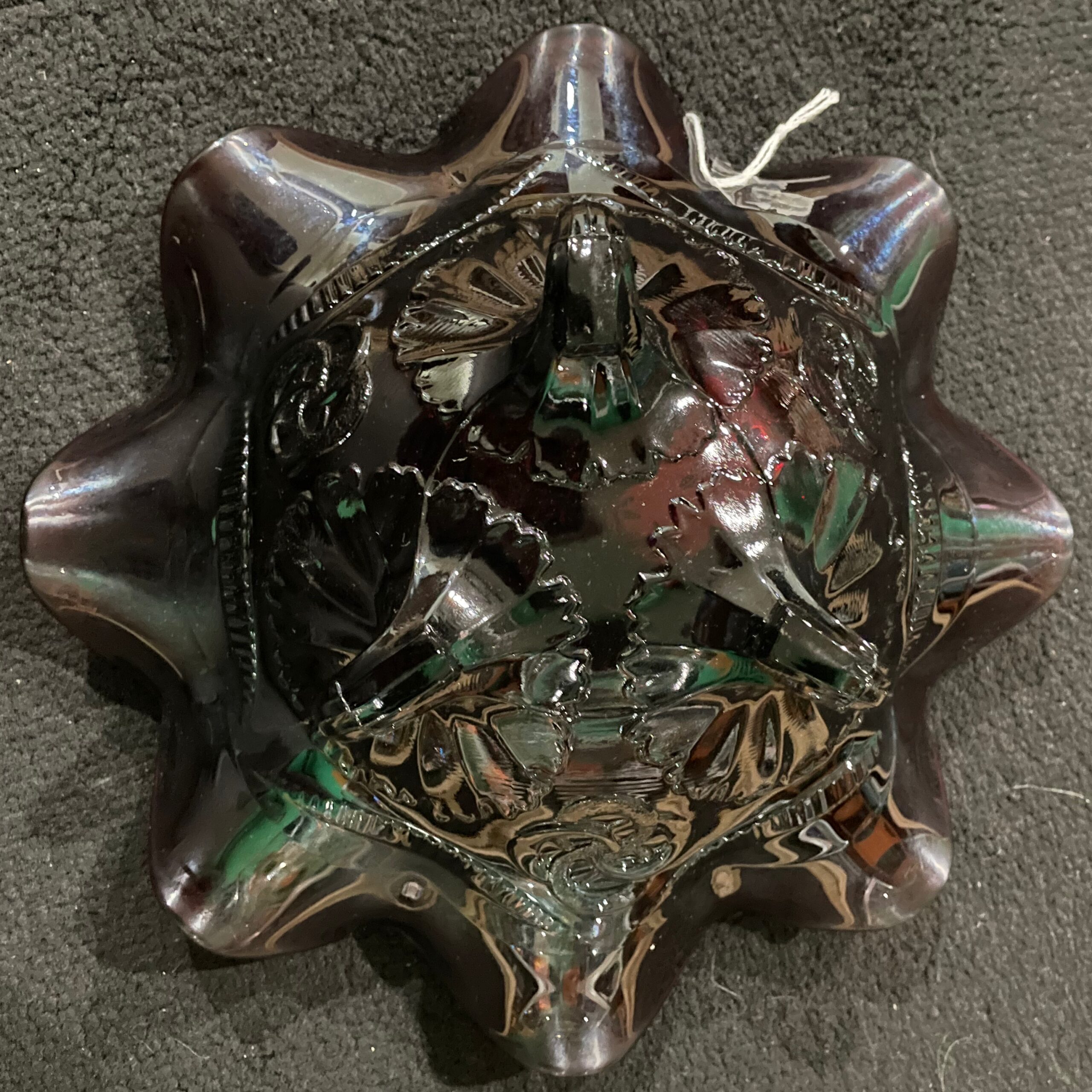
Here is a photo of the back of the bowl
And we’ve always wondered – does anyone know where the second example reported ended up? Does anyone know who reported it? We’d love to know. There is no reported sale yet in the Hooked on Carnival website and the only record on Doty is for this one (purchased in 2000 by Dean & Diane).
This article first appeared in the Carnival Glass ACTION (joint publication of Texas Carnival Glass Club and HOACGA) in the May 2024 issue and is reprinted with permission.